 Oleksandr Kozachenko · entrepreneur, backend developer, 22 years in trade
One order:
10 minutes 20 seconds
This is how we ship in my own company: one button, and the e-documents, the waybill, the labels and the email to the client all go out by themselves. It can work the same way in your company — on your systems and your processes.
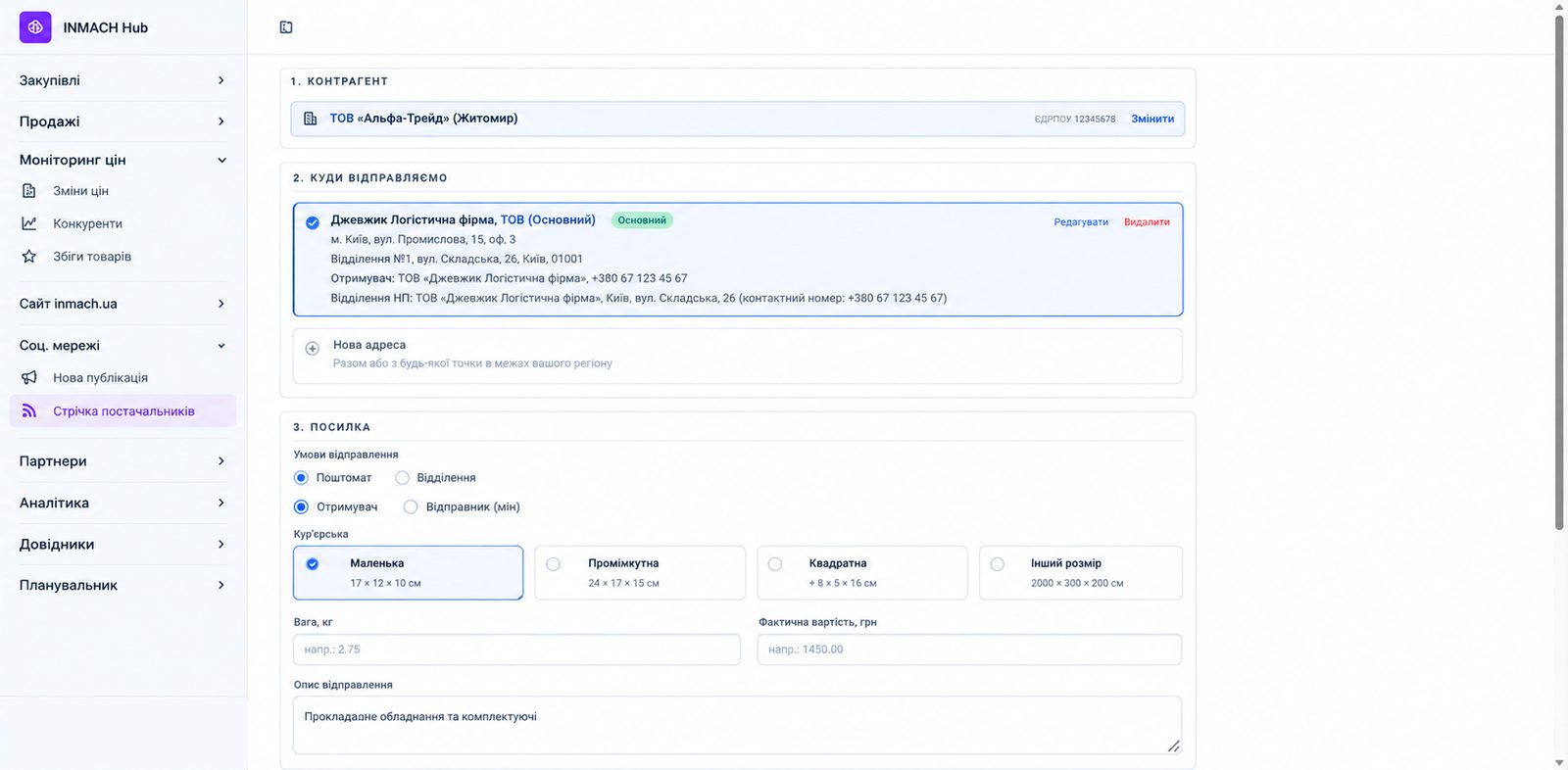
Sound familiar?
The routine your people still do by hand
This routine looks normal until someone shows that it does not have to exist. So we do not ask, we show.
If at least three lines ring true, they can be removed. In my own company I already did.
Sales manager
- Re-types orders from the website, the marketplaces and Instagram into the accounting system by hand
- Issues a waybill in the portal of Nova Poshta, the main Ukrainian carrier, and forwards the tracking number to the client by hand
- Builds a quotation in Word / Excel for 20–30 minutes
- Checks stock and prices before every reply to a client
Accounting
- Posts the bank statement by hand several times a day
- Types supplier invoices from PDF by hand
- Uploads documents to Vchasno or M.E.Doc — the Ukrainian e-document services — and signs each one separately
- Digs for signed documents from past years
Warehouse and shop
- Prints labels and waybills from different programs
- Reconciles stock on the website, in the accounting system and across the shops once a week
- Changes prices and promotions in every shop separately
- Searches the carrier's portal for the client's latest address
Director
- Asks for a report and waits a day or two
- Cannot see margin per client or sales per shop without Excel
- Cannot remember when the database backup was last checked
- Every discount and every non-standard order waits for one person — the director or someone trusted
Live demo
Try it: ship an order
A demo shop with goods and customers already in it. Pick the quantities, press Ship, and in a second you see a PDF invoice, a barcode label, a waybill and the e-document status. Nothing to type.
The invoice and the label are real, built right in your browser. The waybill and the e-documents are imitations marked “demo”.
What we automate
Five areas. In each, something that already runs in my own company
An area is a way into the conversation, not a box: the actual scope is put together around your process, your systems and your schedule.
Cases from my own business
Not from a slide deck, but from my own company
Whether you sell industrial equipment, as I do, or clothes, building materials or something you make yourselves, the routine is the same: re-type the order, collect the documents, reconcile the stock, work out the margin.
The cases below are examples, not a price list and not a box to install: yours will be your own, on your systems, your schedule and your rules. The figures are ≈ the owner's estimate from his own experience, not measurements in other companies.
Calculator
Work out how much time the routine eats
Three sliders and a rough number of hours per month your company spends on manual order handling.
With 500 items in the price list, checking stock and prices by hand is a few more hours a week, on top of the orders.
Why us
Behind the counter, then B2B sales, then my own business — and the routine got old
Twenty-two years in trade: behind the counter, running a department at a chain of DIY hypermarkets, selling industrial equipment B2B for a German manufacturer, and since 2016 running my own trading company.
The routine got old enough that since 2022 I have been writing backend code myself — and I automated my own company. Now we do the same for other trading companies: you talk to the person who writes the code, not to a project manager.
How we work
Three steps, and at every one you talk to the person who writes the code
-
A conversation
Half an hour on what your sales managers, warehouse, shops and accounting spend the most time on.
-
Audit and plan
We take the processes apart from the inside and show what to remove first and what it saves.
-
Build and support
We build it in stages and suggest what to do better. We do not disappear after launch.
Price. The conversation and the short audit are free. The work is split into stages and the price of each one is fixed in the plan — no hourly billing; we start with what saves the most time. No advance payment: we show you a finished stage, you accept it, then you pay and we move on. Everything is official: contract, invoice, act. The code, the access and the documentation are yours.
Request
Discuss a task
Tell us what you would like to automate, or just describe where the most manual work is. We answer within a working day.
- Your request reaches us in Telegram and by email at once; you get a confirmation letter.
- Within a working day we write or call and agree on half an hour to talk. I hold that conversation personally.
- After the call — a short free audit and a plan with a fixed price per stage.